01 / Reframe the work
A PIR is not a watchlist. It is a decision question.
A Practical Guide to Building Intelligence-Driven Security Operations, turning business risk into the sharp questions that focus collection, analysis, and every decision that follows.
Written for CTI analysts, SOC managers, and security leaders who are done collecting intelligence that goes nowhere.
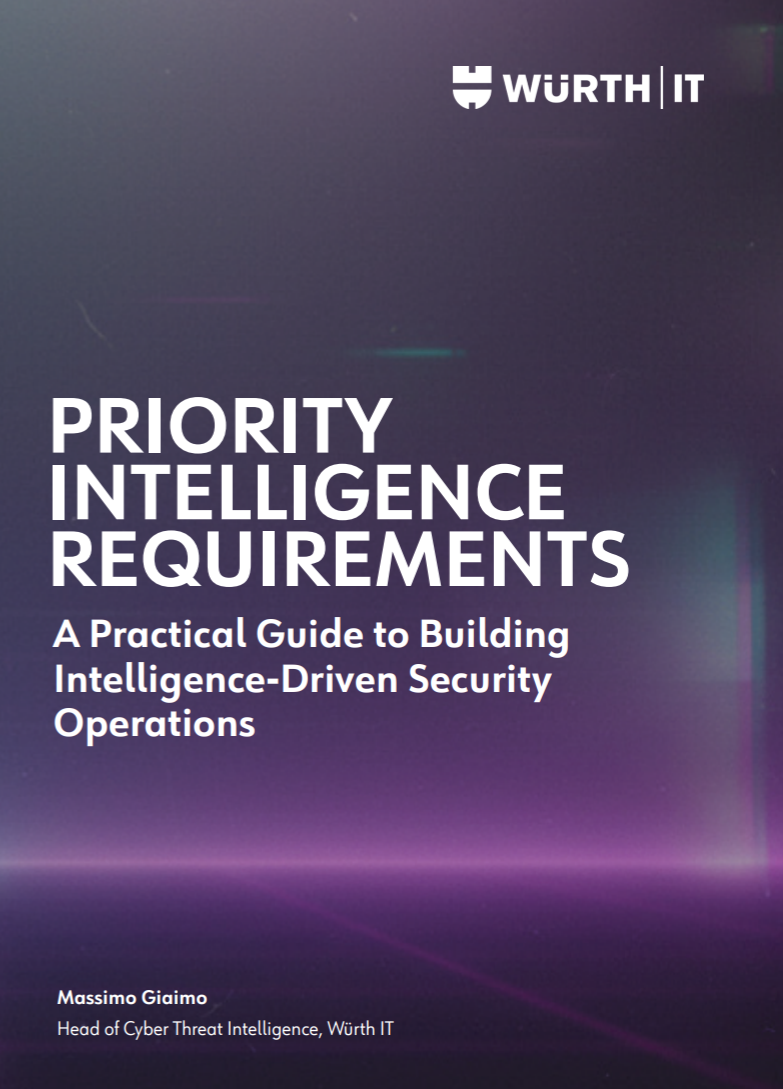 The field manual · Out now
You already have feeds, dashboards, alerts, and reports. PIRs answer the question underneath all of them: what must we know to make the next good decision?
Prioritize the intelligence that maps to your assets, risks, stakeholders, and operating choices.
Review relevance, timeliness, and outcomes - then tune the requirement as the threat landscape and the business change.
The book keeps PIRs grounded in real program work: stakeholder needs, monitoring perimeters, analysis, outputs, and the feedback loop that makes a program better.
Day one of your journey: defining your Priority Intelligence Requirements.
PIRs runs through every phase of the threat intelligence life cycle.
Leverage the threat model to build high-quality PIRs, and vice versa.
Defining PIRs is not a solo activity for the intelligence team. It requires structured engagement with stakeholders across the organization.
PIRs cannot be defined in isolation. They require structured engagement with the people who understand the organization’s risks, assets, and decision-making needs.
Once PIRs have been defined, they must be translated into concrete platform configurations.
The main types of intelligence and their mapping to specific PIRs.
Feeds and platforms are not enough if the intelligence remains within those channels without being properly utilized and leveraged.
If you can show that a specific PIR led to a specific action that prevented a specific harm, the value of threat intelligence becomes concrete and defensible.
Large enterprise groups face intelligence challenges that are qualitatively differentfrom those of single organizations.
A week-by-week plan covering the first 12 weeks of implementation.
A well-designed PIR program enforces proportionality and focus, which are the foundations of ethical intelligence collection.
Organizations must build PIR programs that are aligned with industry best practices.
A threat intelligence program is only as strong as the team that runs it.
Artificial intelligence is now part of the reality of modern threat intelligence.
The world does not stand still, and neither should Priority Intelligence Requirements.
A community membership is not a supplementary activity but a core operational discipline.
PIRs sit at the planning and direction stage, but they are never a one-time form. They guide collection, analysis, production, dissemination, and the review that keeps the whole program useful.
 Massimo Giaimo · Author
Massimo Giaimo, Head of Cyber Threat Intelligence at Würth IT, wrote this guide for practitioners who have to make intelligence useful in the real world: with imperfect data, competing priorities, busy stakeholders, and decisions that cannot wait for a perfect picture.
It pairs a repeatable structure with the habits that make an intelligence program trustworthy - clarity, context, timely delivery, and honest feedback.

Start with the question that matters. Use the book as your practical companion for making PIRs part of how your organization understands and manages cyber risk.
Request the book